
Community
AP News Summary at 9:46 a.m. EST
By Marcus Hayes
Advertisement · Why this ad?
Marcus has been a reporter for 4 years and has a degree in Community Development from the University of Texas at Arlington. His work has appeared in various local publications including the Killeen Daily Herald, where he focused on grassroots initiatives and community events.
More from Marcus →
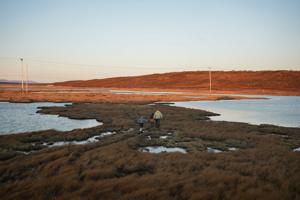
Whether the dish is called stuffing or dressing depends on who’s cooking, and what goes into it depends on the region and the family. Oysters, cornbread, black rice and chestnuts all turn up in Thanksgiving recipes, and each carries a story. One is a farmed version of wild rice that Minnesota researchers began developing in the 1950s; another was an everyday food in Appalachia until a blight struck, and it now appears mostly at the holidays. Southern cooks call it dressing, pouring cornbread batter into a greased baking dish and taking a sweet tea break while it bakes. Northern cooks, by comparison, are busy putting stuffing into the bird. One South Carolina guide frames the rivalry as cornbread dressing versus bread stuffing , and it says the South has already picked a side. Food safety is one reason the dish is baked on its own Federal food-safety guidance does not recommend stuffing a whole turkey, citing a higher risk of cross-contamination and a longer cook time, and recommends cooking the stuffing separately. One regional guide says baking dressing in a dish avoids worries about undercooked stuffing. Cornbread dressing often bakes in about half an hour, depending on the amount. Oysters define the coastal versions Oyster dressing is eaten from New England down the East Coast to the Lowcountry and around the Gulf, wherever oysters are plentiful. Oysters are paired with sausage and mushrooms, and the bread underneath can be white, wheat or cornbread. The dish becomes distinctly Southern once it includes cornbread . Eating oysters only in months with an R was long considered safer, since the bacterium Vibrio thrives in warm water, mainly from May through October. Cold-chain management and tagging now track how oysters reach market, but the bacterium can be present year-round , and thorough cooking removes the risk. Cornbread dressing has a long Southern history Cornbread dressing belongs to Southern food culture as much as grits or biscuits do, and its history runs back to “ kush ,” a dish enslaved West Africans made in the South by frying day-old cornbread with onions and seasonings in a skillet. Its grainy texture and slight buttermilk tang pair well with other Southern dishes. One South Carolina recipe starts with crumbled day-old cornbread combined with celery and onion sautéed in butter. Herbs such as sage and thyme go in along with a beaten egg and enough poultry stock to make a soupy mixture close to pancake batter. In South Carolina, recipes favor oysters in Charleston and the Lowcountry, while cooks around Florence and the Pee Dee often add country sausage. Giblets may go into the dressing or into the gravy served over it. The black rice in many stuffing recipes is not wild Black rice is common in Thanksgiving stuffing recipes, but it is paddy rice , a farmed crop that Minnesota researchers began developing from wild rice in the 1950s . By the 1960s, it was planted in rows in flooded paddies and harvested by combine . Wild rice looks and tastes different from the paddy kind sold in grocery stores, and it is harder to find. Once cooked, it turns a milky brown that varies from lake to lake and has a smoky, campfire-like flavor, while paddy rice is jet black. In northern Minnesota, the wild rice harvest lasts about two weeks in September . Harvesters pole canoes through dense rice stands and use wooden sticks called knockers to sweep the seed heads into the boat. The kernels are then parched over heat, a step the Ojibwe once did by smoke-drying rice in birch-bark vessels before kettles came into use after colonial contact. Today, some parchers use iron kettles, while others use large steel-drum barrels over wood fires. Rice camps pass the knowledge between generations, with children starting by sorting hulls beside elders. Chestnuts were once an everyday food in Appalachia The American chestnut once grew across the eastern United States, from southern Maine to Georgia and west to Ohio, and it stood especially thick in southern Appalachia. Many trees grew on common land open to anyone who wanted to forage, which made the nuts especially valuable to enslaved and poor families. Families ate the nuts, raced hogs and turkeys to the trees, and traded nuts at general stores for goods such as coffee and sugar. The strong, easy-to-work wood had its own uses, and its tannins went into tanning, while folk medicines were made from the leaves. In Kentucky, steamboats made it possible to ship chestnuts beyond the local area in the early 1860s, and roads and railroads expanded the trade in the following decades. Records suggest Virginia’s chestnut crop totaled 2 million pounds by 1914. A massive blight was already spreading then, and by 1940 nearly 85% of the chestnut trees in the Great Smoky Mountains were wiped out. Few foods are more tied to the winter holidays than chestnuts, whether they are roasted or folded into stuffing, and they are probably gone from kitchens after New Year’s. The season began in late fall, when a chestnut storm of gusty winds left the ground strewn with nuts and offered many families relief from hunger. Once the blight spread, the chestnut receded into nostalgic novelty in the American diet. The side dish is the star of the meal Chopped hard-boiled eggs and even bacon are among the additions people argue for in cornbread dressing. Even without those additions, the dish can anchor a meal made up of nothing more than a turkey wing and a little gravy. Whatever is left can turn into stuffing, turkey and potato patties the next day. Whatever the dish is called, its ingredients trace back to a place: oysters to the coast, cornbread to the South, wild rice to the lakes of northern Minnesota and chestnuts to the forests of Appalachia. Each cook decides which of those places reaches the table. Jennifer Allen is a retired professional chef and long-time writer. Her work appears in dozens of publications, including MSN, Yahoo, The Washington Post and The Seattle Times. These days, she’s busy developing recipes in the kitchen and traveling the world, and you can find all her best creations at Cook What You Love . The post Stuffing or dressing: The debate rages on with a few twists thrown in appeared first on Food Drink Life . More from this section News Top UK appeals court rules gay sex not a crime in the Caribbean nation of Trinidad and Tobago Updated Nov 10, 2026 News A man is arrested after allegedly saying he had a bomb while aboard a flight bound for New Orleans Updated Nov 10, 2026 News Temple bioscience district chairman resigns, leaves two board vacancies 20 hrs ago News Historic Ship New Reef 18 hrs ago Inside Killeen Podcast
By Marcus Hayes

By Marcus Hayes
By Marcus Hayes

By Marcus Hayes